

Open-concept homes look stunning in photos. Standing inside one during a dinner party, with six conversations bouncing off every hard surface at once, tells a different story.
That gap between how a modern home looks and how it actually sounds is real, and it’s more common than most homeowners realize. In fact, sound privacy is the single biggest source of dissatisfaction reported across building performance surveys worldwide, ahead of lighting, temperature, or layout complaints. Finding the best acoustic wall panels for modern interiors isn’t a niche fix anymore. It’s quietly becoming standard practice in the same open, minimalist spaces everyone’s been designing toward.
Why Modern Homes Got So Loud
The design choices that make a home feel spacious and current are the exact same choices that make it echo.
Hardwood and tile floors, glass partitions, bare drywall, high ceilings, minimal soft furnishings- every one of these reflects sound instead of absorbing it. Remove the walls between kitchen, dining, and living room, and you also remove the natural sound barriers those separate rooms used to provide. The result is a single large space where every sound- conversation, cooking noise, a blender- travels farther and lingers longer than it should.
Acoustic Panels Aren’t Studio Foam Anymore
This is where most homeowners are still working off an outdated picture.
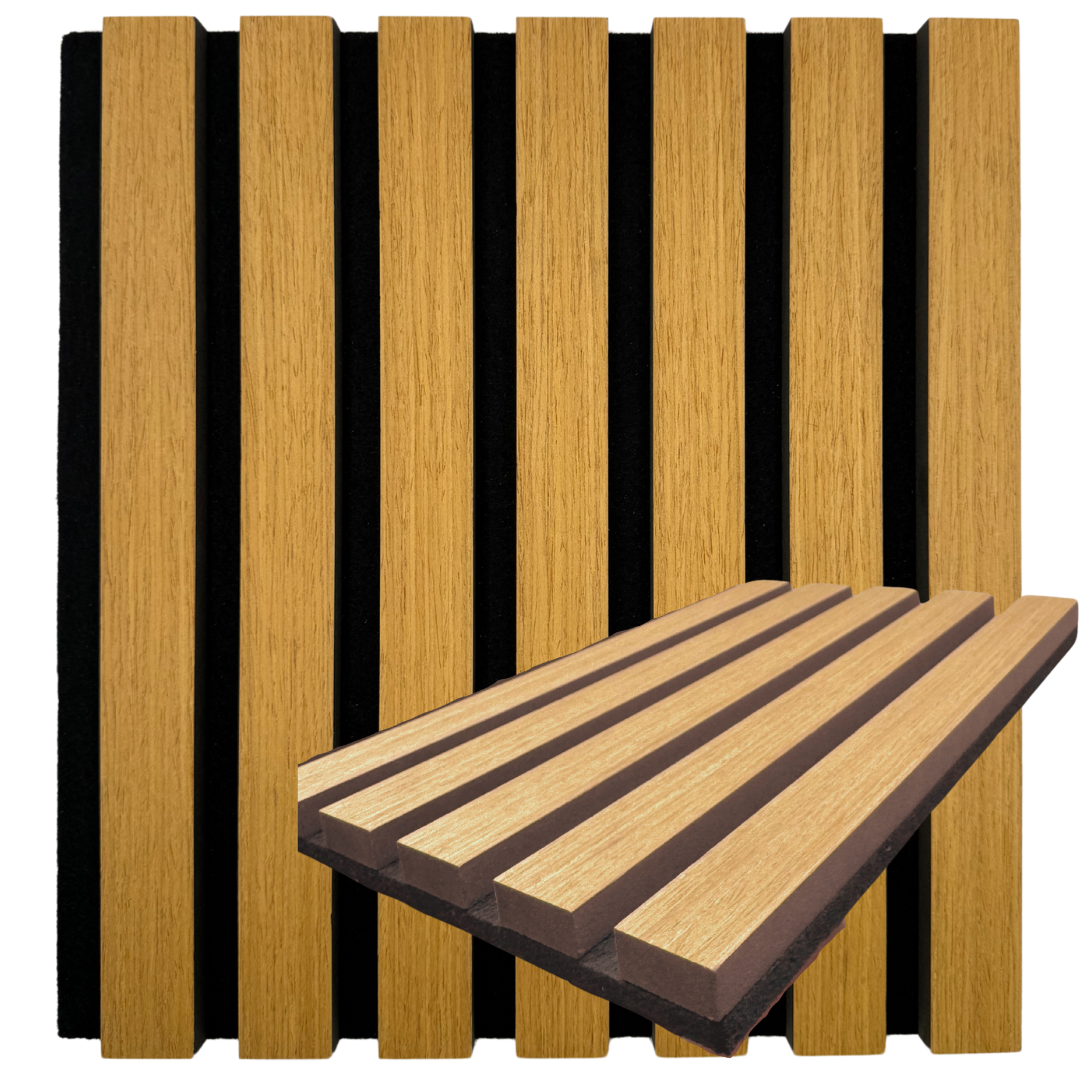
Acoustic treatment used to mean grey foam wedges bolted to a recording studio wall, something to hide, not show off. That’s not what these panels look like anymore. Modern slatted wood-look panels combine a diffusing wood face with an absorbing felt backing underneath, breaking up sound waves while genuinely working as a design feature, not a compromise bolted on afterward.
That shift matters. Homeowners aren’t choosing between good acoustics and good design anymore. The panel doing the sound work is often the same panel doing the visual work.
Where to Actually Put Them
Coverage doesn’t need to mean covering an entire room. Treating roughly 25 to 40% of the primary reflective surfaces is generally enough to make a noticeable difference.
The highest-impact spots tend to be the same across most homes and offices:
- A feature wall behind a sofa or television in an open-plan living space
- Home offices, especially ones doing regular video calls
- Boardrooms and meeting rooms where speech clarity matters most
- Walls directly facing each other across an open floor plan, where echo bounces hardest
Canada Plastics
This is exactly the shift Canada Plastics has built its acoustic panel line around.
Available in New Grey, Natural Oak, Mocha Oak, Rustic Brown, and Ebony Black, Canada Plastics‘ 25mm acoustic wall panels are sized at 24 inches by 9 feet, designed for straightforward DIY installation using a dedicated panel adhesive, with bulk ordering and shipping available Canada-wide. For homeowners and designers comparing the best acoustic wall panels for modern interiors, that combination of genuine wood-tone finishes and a simple, glue-based install means solving an echo problem doesn’t require ripping into drywall or hiring a specialist crew.
FAQ’s
Q1) Why do modern open-concept homes echo more than older homes?
Hard surfaces like tile, glass, and drywall combined with minimal furniture and high ceilings reflect sound instead of absorbing it.
Q2) Do acoustic panels actually work for reducing home echo?
Yes. They diffuse and absorb sound waves, reducing reverberation and improving speech clarity in open or hard-surfaced rooms.
Q3) How much wall coverage is needed for a noticeable acoustic improvement?
Roughly 25-40% of the primary reflective surfaces is typically enough to meaningfully reduce echo.
Q4) Can acoustic wall panels be installed without professional help?
Yes. Many modern panels, including slatted wood-style designs, install with a simple panel adhesive suited for DIY installation.
Q5) Where can I buy quality acoustic wall panels for a modern interior?
Canada Plastics offers acoustic wall panels in multiple wood-tone finishes, suited for homes, offices, and commercial interiors Canada-wide.
Conclusion
A beautiful room that’s exhausting to talk in was never actually finished.
Acoustic panels close that gap now without asking anyone to sacrifice the look they designed the room around in the first place.
That’s the quiet part of the revolution; it was never really about hiding the fix. It’s about the fix finally looking as good as everything else in the room.