

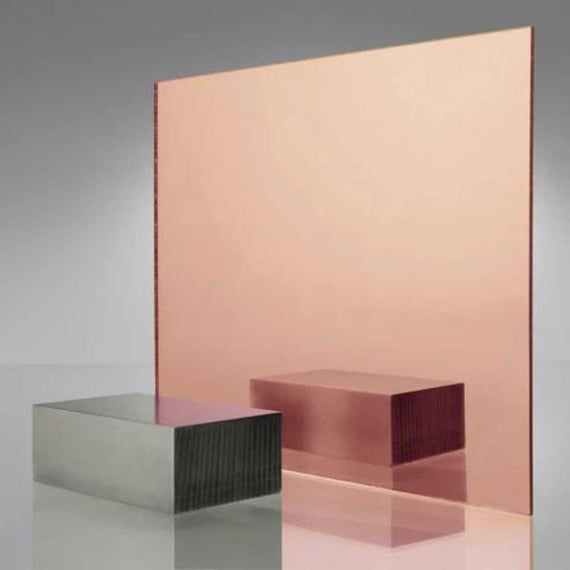
If you’ve walked into a stylish café, a modern office, or a well-designed apartment recently and noticed how bright and spacious it felt, there’s a good chance mirrored acrylic played a part in that. It’s one of those materials that does a lot of quiet work in a space without drawing attention to itself.
What makes it different from a regular mirror?
Most people’s first question is — why not just use glass? And it’s a fair one.
The short answer is that a mirrored acrylic sheet gives you the same reflective effect as glass but without the weight, the fragility, or the installation headaches. It’s significantly lighter, it won’t shatter if something hits it, and it can be cut and shaped far more flexibly than glass ever could be.
For designers working on custom installations or unusual shapes, that flexibility is a big deal. You’re not locked into standard rectangular panels. You can work with curves, custom sizes, and creative configurations that glass simply won’t allow.
Making small spaces feel bigger
This is probably the most practical reason people reach for mirrored acrylic sheets. In a small apartment, a compact office, or a narrow retail space, a well-placed reflective surface genuinely changes how the room feels. Light bounces around, the eye gets drawn further into the space, and what was cramped starts to feel open.
It works with both natural and artificial light, which means it’s just as effective in a windowless room as it is in one flooded with sunlight.
Beyond just looking good, mirrored surfaces in hallways and corridors also reduce blind spots, which has real practical value in workplaces and public spaces where people are moving around corners and through tight passages.
It’s low maintenance, too
One thing that surprises people is how easy a mirrored acrylic sheet is to look after. Soap and water are genuinely all you need to keep it looking clean and clear. It handles moisture well, which makes it a practical choice for kitchens and bathrooms where humidity is a constant.
And because it won’t shatter, you don’t have to worry about the safety risks that come with broken glass, particularly useful in homes with young children or in busy commercial environments.
Where are people actually using it?
The range is pretty wide. Wall panels in living rooms and bedrooms, furniture accents, retail display backdrops, decorative installations in restaurants and hotels, gym walls — anywhere that benefits from light, depth, and a modern finish.
It comes in different colors and finishes, too, so it’s not just the classic silver look. Warmer tones like bronze and gold work well in certain interiors, and the variety means it can fit into a much broader range of design styles than people initially expect.
Speciality Plastics — worth knowing
For designers and builders looking for a reliable supplier, Speciality Plastics offers mirrored acrylic sheets across a solid range of sizes, finishes, and colors. Their cutting and sizing services mean you can get sheets prepared to your exact specifications, which saves time and reduces waste on site.
They also take manufacturing quality seriously — durable materials, proper standards, and an approach that considers sustainability alongside performance.
Quick answers
1. How is mirrored acrylic better than a glass mirror?
It’s lighter, shatterproof, easier to cut into custom shapes, and simpler to install. The reflective effect is very similar, but without the safety risks and limitations of glass.
2. What sets Speciality Plastics apart?
Consistent material quality, good customization options, and reliable service make the whole process easier for designers and builders.
Bottom line
Mirrored acrylic sheet is one of those materials that quietly solves a lot of problems at once — it looks good, it’s practical, it’s safe, and it gives designers real creative freedom. Whether you’re working on a home renovation or a large commercial fit-out, it’s worth considering seriously.
And if you need a supplier who can deliver the right spec every time, Canada Plastic is a solid choice.